Quick answer
How Do AI Tools Scale Across a 5-Rooftop Dealer Group?
AI scales across a dealer group through centralized configuration, per-rooftop personas, and shared reporting — not by deploying five separate tools.
TL;DR
AI scales across a dealer group by running a single platform with rooftop-level personas, inventory feeds, and escalation rules — giving each store its own voice while the group shares one dashboard, one compliance layer, and one cost structure.
A five-rooftop dealer group processes anywhere from 2,000 to 5,000 inbound leads per month. At that volume, a human BDC either burns out or misses follow-ups — usually both. The question isn’t whether to bring in AI; it’s how to deploy it without creating five separate problems instead of one solved one.
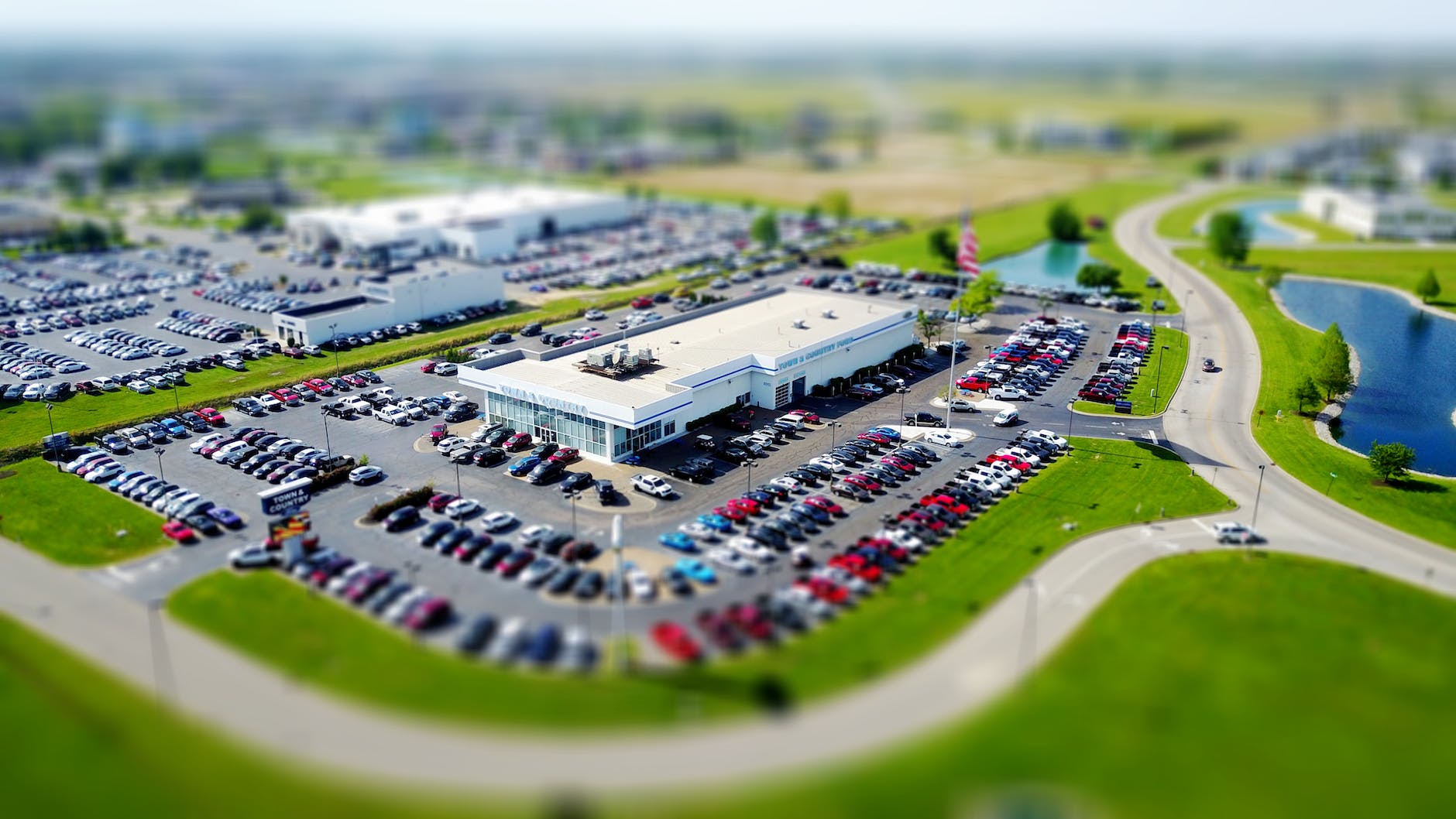
Why Dealer Groups Are a Different Animal Than Single-Point Stores
A single-point store has one inventory feed, one sales team to escalate to, and one brand voice to maintain. Add four more rooftops and every one of those variables multiplies — but the operational overhead doesn’t have to.
The group-level challenge is coordination: making sure a lead that comes in at your Chevy store isn’t worked by the Ford store’s BDC script, that pricing messaging reflects each store’s current vAuto strategy, and that no customer gets a response that contradicts what they saw on CarGurus or AutoTrader. Those problems compound fast if you treat each location as its own island.
The Core Architecture: One Platform, Many Personas
The right architecture is a single AI platform with rooftop-level persona layers sitting on top. Think of it like a franchise model: the franchisor (the platform) holds the core logic, compliance rules, and reporting infrastructure. Each franchisee (each rooftop) gets its own storefront configuration — brand voice, inventory data, escalation contacts, and OEM messaging guidelines.
This matters because the alternative — five separate subscriptions to five separate tools — means five onboarding processes, five billing relationships, five sets of escalation rules to audit when something goes wrong, and no unified view of group-level performance. That’s not scalability; that’s multiplication of complexity.
Rooftop-Level Customization: Inventory, Brand Voice, and Escalation Rules
Each store’s persona configuration should cover at minimum:
- Live inventory feed — pulled from DealerCenter, vAuto, or the DMS so the AI never quotes a vehicle that sold yesterday
- Brand voice and OEM compliance — a Toyota store’s messaging guidelines differ from the Kia store two blocks away
- Escalation routing — who gets the hand-off, under what conditions, and through which channel (CRM task in VinSolutions, eLead activity, SMS to manager)
- Operating hours — each store may have different hours; the AI should know when it’s holding a conversation for a human vs. working it through to an appointment
Dealers running Synthevo today configure these layers through a shared admin panel, meaning the group’s fixed ops director or marketing manager can update one store’s trade-in messaging without touching the other four.
Centralized Reporting Across All Five Stores
The group-level dashboard is where multi-rooftop AI pays for itself in clarity. Instead of pulling five separate reports from five Podium accounts or five Conversica portals, a GM or dealer principal sees:
- Contact rate by rooftop
- Appointment set rate by lead source (Cars.com vs. organic vs. AutoTrader)
- Escalation frequency — which stores are handing off most leads and why
- Response time distribution across all five locations
This view surfaces underperforming stores immediately. If your Honda store is setting appointments at 22% and your Nissan store is at 11%, you find out in one dashboard, not in a quarterly review when the damage is done. Understanding what makes a great internet sales process at a dealership starts with having visibility into each step of it — group reporting makes that possible at scale.
Compliance and 10DLC at the Group Level
10DLC registration is the unglamorous part of AI texting at scale, and it trips up groups that try to DIY it. Each rooftop needs its own dedicated number, but the campaign registration — the part that tells carriers what your messages are about — can be filed once at the group level under a single brand entity.
Do it wrong and you get message filtering that tanks deliverability across all five stores simultaneously. Do it right and every rooftop has a compliant, registered number that carriers treat as legitimate business traffic.
The Contrarian Take: This Is Easier to Manage Than a Legacy BDC
Most dealer groups over-complicate AI rollouts by treating each rooftop as a separate deployment. The assumption is that more locations means more complexity — but that logic applies to human BDC teams, not to software.
A single AI platform with five persona layers is operationally simpler than one store running a traditional BDC of six people. There are no sick days, no turnover training cycles, no inconsistent scripts between reps. The group principal sets the rules once; the AI applies them the same way at 11 AM and 11 PM. Groups that accept this architectural reality stop asking “how do we manage five deployments?” and start asking “how do we tune one deployment well?”
Common Failure Mode: Deploying Five Separate Tools
This is the path of least initial resistance and highest long-term cost. A group that buys five separate Conversica or Podium licenses — or mixes tools across rooftops — ends up with fragmented data, no cross-store benchmarking, and a vendor management headache that grows with every acquisition.
As lead acquisition costs shift — and they are shifting, as covered in detail for dealers watching AutoTrader Just Repriced Its Packages — What Dealers Must Do Now and CarGurus Just Changed Its Pricing — Here’s What Dealers Must Do Now — groups that convert leads at higher rates from a unified platform will absorb those cost increases better than groups paying per tool per store.
What a 5-Rooftop Rollout Actually Looks Like (Week by Week)
| Week | Milestone |
|---|---|
| 1 | Pilot rooftop goes live — inventory feed, CRM integration, 10DLC registration |
| 2 | Tune escalation rules based on real conversation data from pilot store |
| 3–4 | Rooftops 2 and 3 onboard using pilot configurations as templates |
| 5–6 | Rooftops 4 and 5 live; group dashboard fully populated |
Vanguard Auto Group, running across multiple Virginia locations, used a phased approach that let each store learn from the prior store’s configuration before going live — reducing the per-store tuning time significantly by the fourth and fifth deployments.
Cost Structure: Per-Seat vs. Per-Rooftop vs. Per-Lead at Scale
| Pricing Model | What It Means for a 5-Rooftop Group |
|---|---|
| Per-seat | Costs scale with BDC headcount; favors groups replacing large teams |
| Per-rooftop | Flat monthly per store; predictable but can penalize high-volume stores |
| Per-lead | Aligns cost directly with activity; works if lead volume is consistent |
The right structure depends on your lead volume distribution. A group where one flagship store generates 60% of all leads should push back hard on flat per-rooftop pricing that makes that store subsidize the smaller locations.
Objection: “We Already Have a BDC That Knows Our Customers”
This is the most common pushback from groups with a centralized BDC team — and it’s a reasonable one. Institutional knowledge matters. The answer isn’t to replace that team; it’s to deploy the AI on after-hours volume, weekend overflow, and the leads that currently sit for more than two hours without a first touch. The BDC handles the warm conversations; the AI handles the volume that was previously falling through.
Groups running Synthevo don’t eliminate their BDC. They reassign those reps from first-touch chasing to closing conversations the AI has already qualified — which is a better use of a skilled human’s time.
If you’re evaluating AI across multiple stores and want to see the single-platform architecture in practice, request access to our live demo — we’ll walk through a group configuration that matches your rooftop count, CRM stack, and lead volume.
Frequently asked questions
- Can each rooftop connect to a different CRM?
- Yes. A well-built AI platform integrates with VinSolutions at one store, eLead at another, and CDK or Reynolds at a third — each feed syncs independently while conversation data rolls up to the group-level dashboard.
- How long does a 5-rooftop rollout actually take?
- A phased rollout — starting with one pilot store, then expanding — typically takes 4–6 weeks from signed agreement to all five rooftops live. Trying to launch all five simultaneously adds risk and slows the team's ability to tune escalation rules before they matter.
- Does each store need its own 10DLC-registered number?
- Each rooftop should have its own dedicated number for compliance and caller ID purposes, but registration happens once at the group level through a single campaign application — not five separate filings.
- What happens when the AI hands off a lead to a human manager?
- Escalation rules are set per rooftop: the AI can route to the on-duty BDC rep, send a Slack or CRM task to the sales manager, or hold the conversation until a human picks it up — all configurable without touching the group-level logic.
Ready to see it?
Your next lead is texting right now.
Stop letting after-hours leads die in the inbox. Tell us about your store and we'll text you a live demo of Synthevo's AI Closer — usually within 30 seconds.